In the world of ultraportable and subnotebook computers from the 1990s, there was definitely an aura of experimentation that was going on. While there were obvious mainstream examples, such as the Toshiba Libretto, you had a whole world of more obscure models, such as the Lexmark Lexbook, Zeos Contenda, and Chandra. Around the time the Libretto came out, there was a flurry of competition for similar looking models, such as the NEC Mobio NX, and the Casio Cassiopeia Fiva.

The machine I have here is a Cassiopeia Fiva, model MPC-101. There were several models in the Fiva lineup, but the 101 model uses a Cyrix MediaGXm processor running at 180MHz! (The 102 model bumps the speed up from 180 to 233 MHz.)
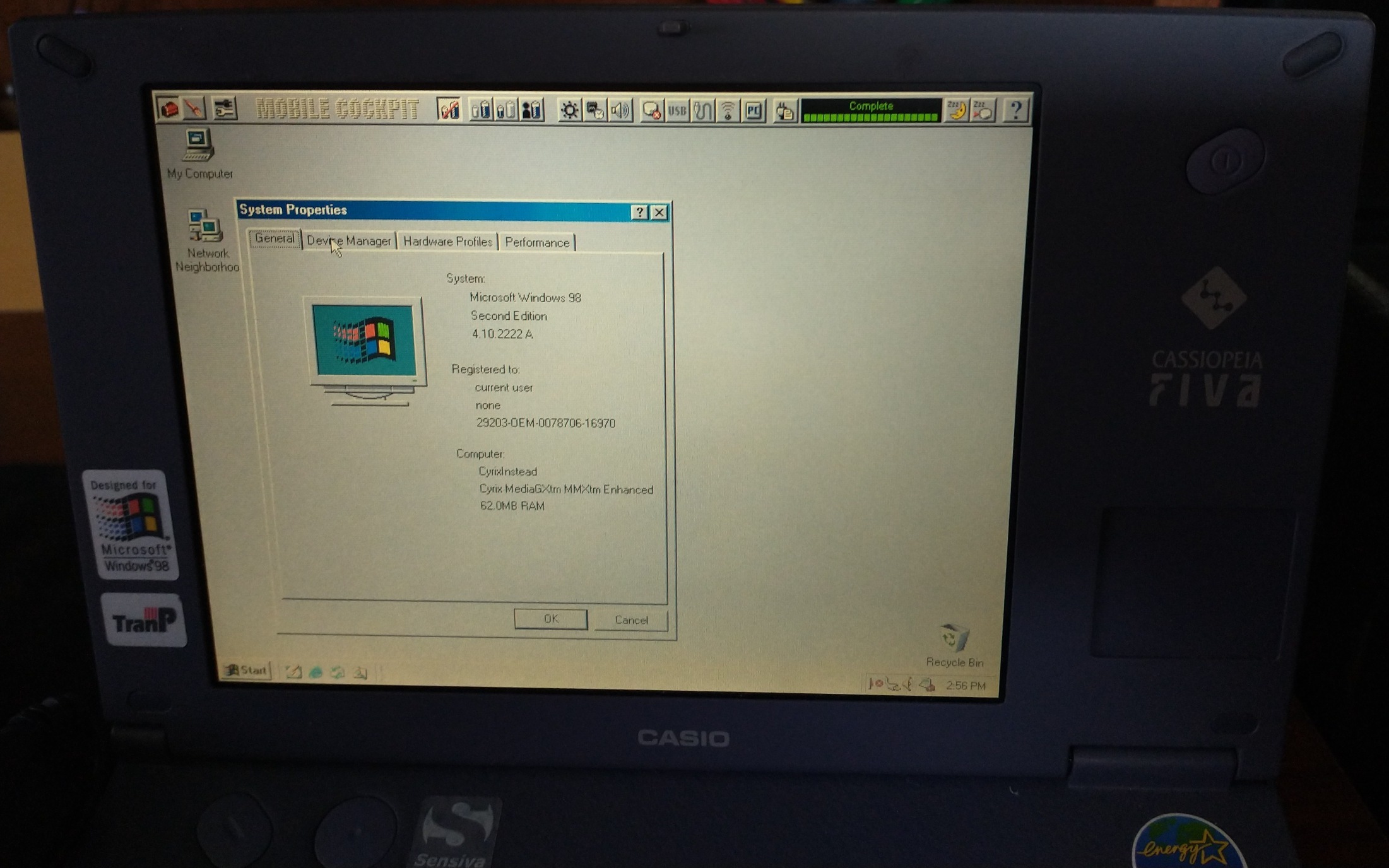

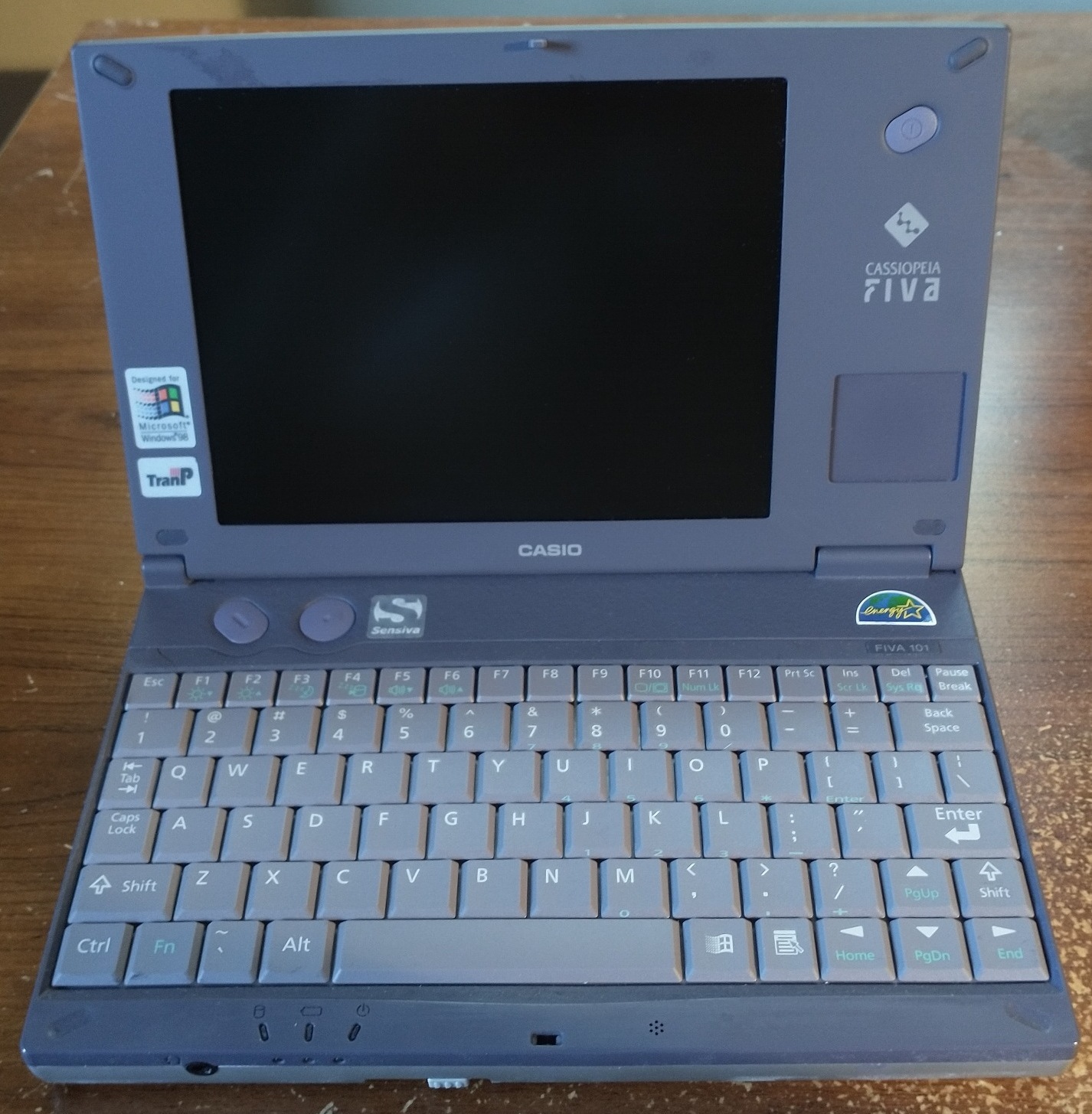
The screen is a 6.7″ 800×600 TFT (active-matrix) display. As you can see, it is very clear, but definitely unusually high pixel density for the time – this calculates to 149.25 DPI/PPI! On the lower-right of the screen is a Trackpad, which acts as the mouse. The mouse buttons are not on the rear of the screen like on the Libretto, but rather above the keyboard.



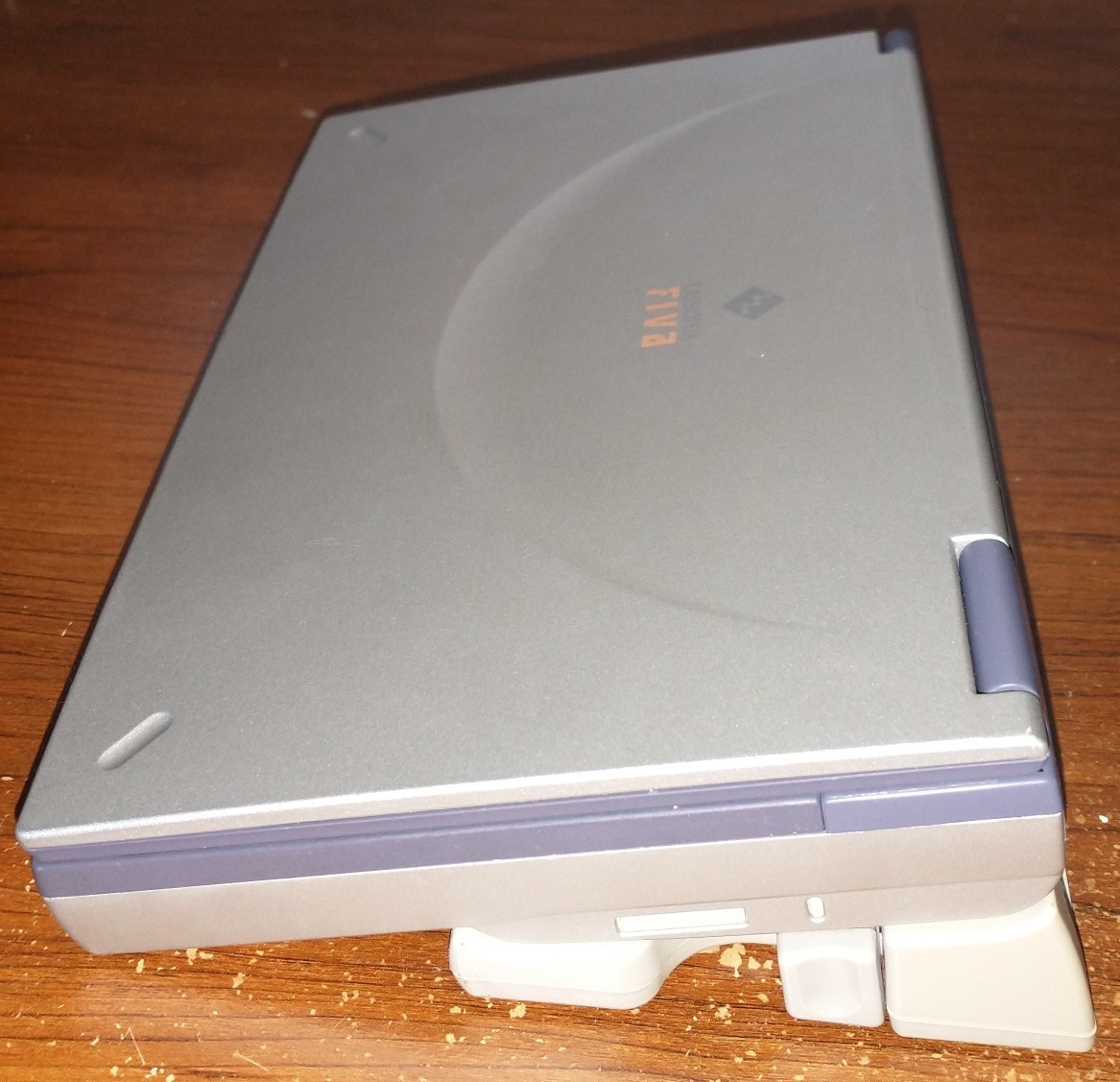
Like many small machines of the era, a docking station/port replicator is available. In several of these pictures, you can see it attached to the bottom of the Fiva.




These originally sold for roughly $1,999 in 2000, which is equivalent to $3,760.91 in 2025.

Recent Comments